
Leroy Jessup’s Resentment and Downfall
The Bad SeedThis thread traces Leroy Jessup’s grievances, his escalating fascination with Rhoda’s secrets, and the fatal reversal that follows when his taunting uncovers the truth.
increasing Bearing strength in each event
 decreasing
Bearing strength in each eventdecreasingA Grievance Habit
A Grievance Habit
Resentment as a Daily Identity
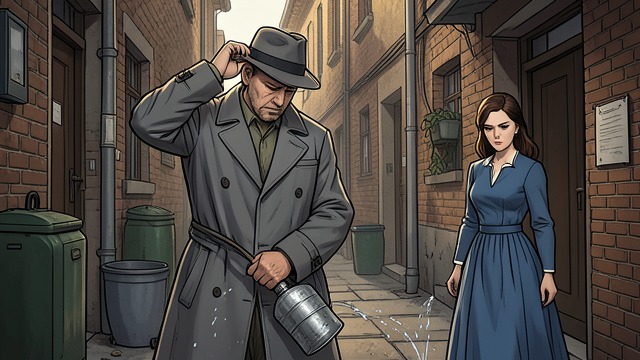
Leroy Jessup interprets ordinary frustrations as proof that the world has cheated him. He resents the tenants’ money and status, exaggerates his family’s hardship, and rehearses grievances while doing his work at the apartment building.
Provocation and Performance
When Monica Breedlove and Christine Penmark try to pass, Leroy deliberately sprays water across their path. He then adopts a posture of apology and humility that lets him believe he has controlled the encounter. His behavior turns a minor task into a private contest over power and recognition.
The resentment is not merely a passing mood: it shapes how Leroy reads every relationship. He imagines himself both victim and clever manipulator, while dismissing the people around him as fools. This self-image leaves him eager for an audience that will recognize his supposed insight, a need that later draws him toward Rhoda.
Recognition in Rhoda
Recognition in Rhoda
A Child Who Sees Through Him
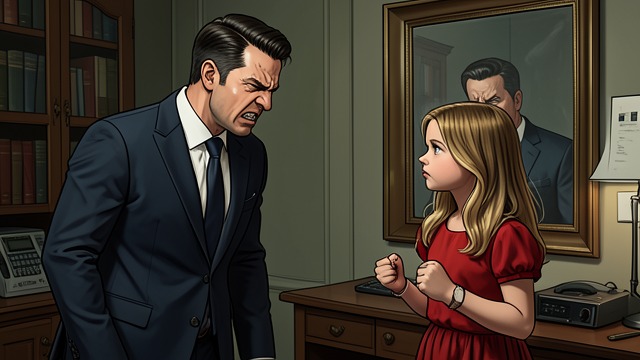
After Rhoda identifies Leroy’s deliberate act with unusual precision, he is unsettled. He has been accustomed to misleading or intimidating others, but he senses that the child understands his motives without being impressed by his excuses.
Hostility with a Distorted Intimacy
Leroy responds by calling Rhoda dangerous and returning repeatedly to his impression of her. He says she resembles him, yet the resemblance is inaccurate: his violent ideas remain fantasies, while Rhoda is capable of acting on calculated impulses.
The encounter creates a peculiar attachment built from antagonism. Leroy wants to expose, tease, and control Rhoda, while also admiring her refusal to be manipulated. His interest gives him a reason to watch her closely, but his self-importance prevents him from understanding the danger of getting too near what he has noticed.
The Taunting Campaign
The Taunting Campaign
A Private Accusation
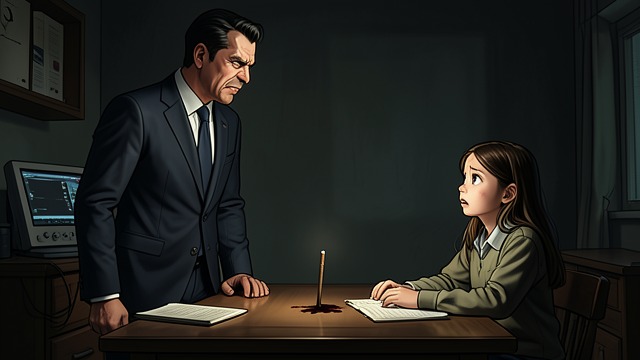
After Claude Daigle’s death, Leroy tells Rhoda that he believes she killed the boy. He invents details about a stick and blood evidence, then watches for signs that his accusations have frightened her. He repeats the story in increasingly vivid forms, taking pleasure in the control he thinks it gives him.
A Warning Ignored
Thelma Jessup tells her husband to leave Rhoda alone, warning that his interference will lead to trouble. Leroy dismisses her concern, convinced that Rhoda will not report him and that his teasing is a harmless game.
His accusations contain elements of insight but are mixed with fabricated evidence and theatrical threats. Because he wants to dominate the exchange, Leroy mistakes Rhoda’s calm for an invitation to continue. The more he treats the murder as material for entertainment, the more he places himself inside the secret he thinks he can exploit.
The Shoes as Leverage

The Shoes as Leverage
A Discovery in the Incinerator
Leroy tells Rhoda that he found the cleated shoes she thought she had burned. He claims to have recovered them from the apartment building’s incinerator and threatens to give them to the police, now describing how their marks could connect Rhoda to Claude’s injuries.
The Balance Reverses
For the first time, Rhoda appears to believe that Leroy possesses evidence. She follows him and demands the shoes, while he tries to retreat from the game once he realizes she is serious. His boast has transformed him from tormentor into a potential witness who holds an object Rhoda needs.
The encounter exposes the weakness beneath Leroy’s bravado. He has mistaken dangerous knowledge for safe leverage and assumed Rhoda will remain inside his rules of play. Her relentless pursuit tells him that he has crossed from teasing into mortal risk, but he does not yet escape the consequences of the secret he has uncovered.
The Basement Fire
The Basement Fire
A Deliberate Act
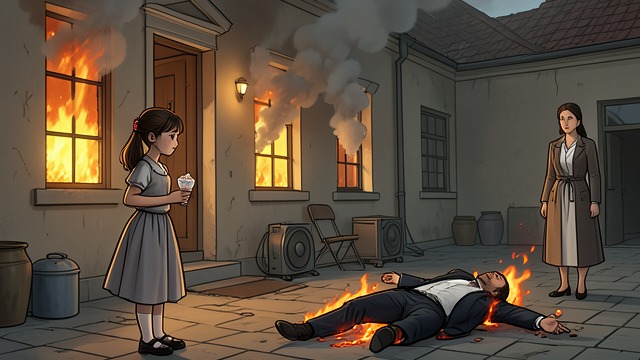
After Leroy has frightened her with the recovered shoes, Rhoda takes a kitchen match and ignites the combustible bedding in his basement hiding place. She closes the door and remains outside eating ice cream while smoke and cries come from within.
Death and Denial
Leroy begs Rhoda to unlock the door and insists he was only teasing her about the shoes. She refuses, and he eventually escapes the burning basement with his clothes alight before collapsing and dying in the courtyard. The surrounding adults accept the fire as an accident, but Christine has seen enough to know it was not.
Leroy’s death is the outcome of a relationship in which his fascination and resentment repeatedly overruled caution. His imagined power over Rhoda proves temporary; the child he thought he could frighten acts decisively when she sees him as a threat. The fire ends his attempt at blackmail and forces Christine to recognize that concealment has now become complicity.
June 7, before the picnic
June 7, after the picnic buses leave
Mid-June through late June
Early August, after Rhoda returns from Seagull Inn
The following day, shortly after noon
